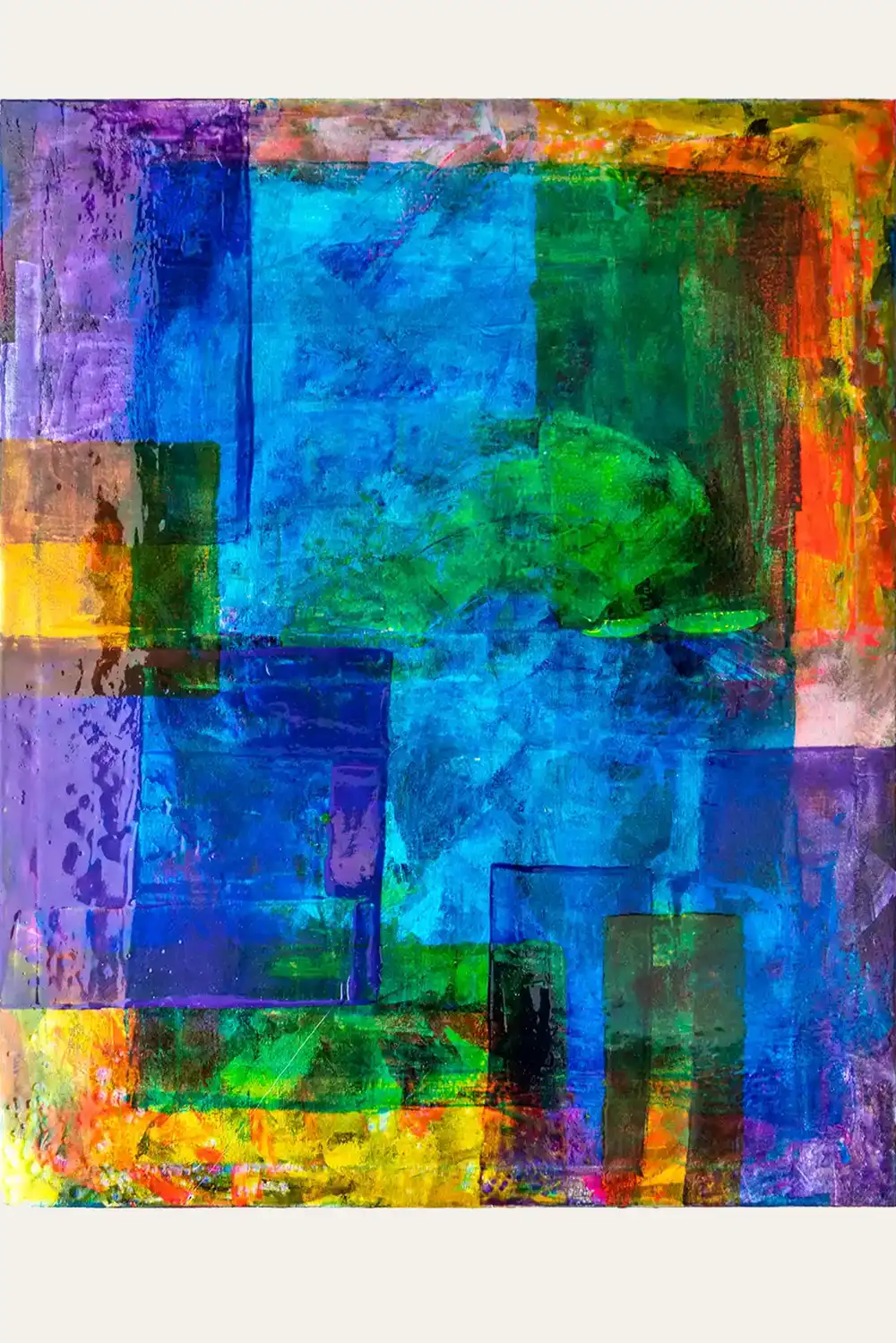
People often apologize when they stand in front of an abstract painting. They say, “I don’t really understand it,” as if the painting were a code they failed to crack. But abstract work does not ask to be decoded. It asks to be met.
Understanding a representational painting is a transaction: you recognize the subject, you read the symbolism, you move on. Abstract painting refuses this efficiency. It slows you down. It insists on duration. The question is not What does it mean? but What does it do to the room you are standing in?
Stop Looking for the Subject
The first step is to release the need for a subject. In the Muscle Memory series, what appears to be a figure is often just the memory of a gesture. The body is not depicted; it is implied by the way the paint moved. The red does not represent anger. It represents the heat of a movement that happened before the canvas was even stretched. When you stop searching for what the painting is “of,” you begin to notice what it is doing.
Notice the Rhythm
Every abstract painting has a tempo. Some are staccato: short, sharp marks that interrupt each other. Others are legato: long, continuous strokes that seem to exhale. Stand back and ask yourself: Is this work breathing fast or slow? That rhythm will tell you more about whether it belongs in your space than any title or statement ever could.
The Edge Matters
It is easy to focus on the center of a painting. But in abstract work, the edge is where the artist made their most honest decisions. Did they stop abruptly? Did they let the paint bleed over? Did they leave a margin of silence? The Emotional Big Bang pieces often carry their tension not in the middle but in the corners — the places where the composition almost failed, and the artist chose to let it stand.
Trust the Physical Response
Your body knows before your mind does. If you find yourself leaning closer, or stepping back, or tilting your head — that is the painting working. Do not override it with analysis. A physical response—the impulse to lean closer, step back, or breathe differently—can be more useful than searching for a correct interpretation.
The Work Chooses You
Through making and living with work, I have come to believe that collecting is not an act of conquest. It is an act of recognition. The painting was already waiting for the person who would see it. Your job is not to be educated enough to deserve it. Your job is to be present enough to notice when the encounter happens.
If you are curious about how a particular piece might resonate in your own space, or if you would like guidance on building a collection, I am happy to correspond directly.
Explore the Emotional Big Bang series · View selected works