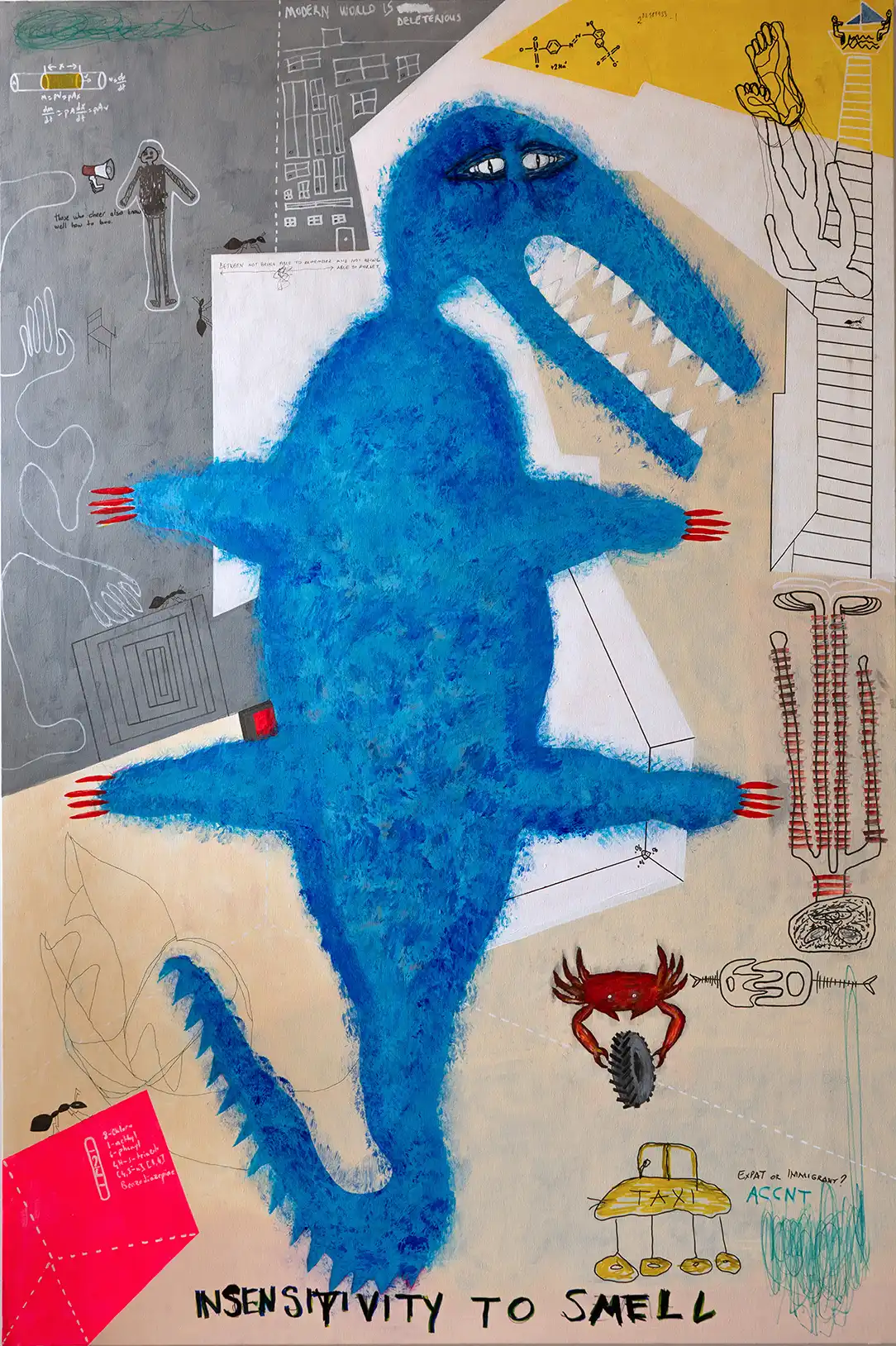
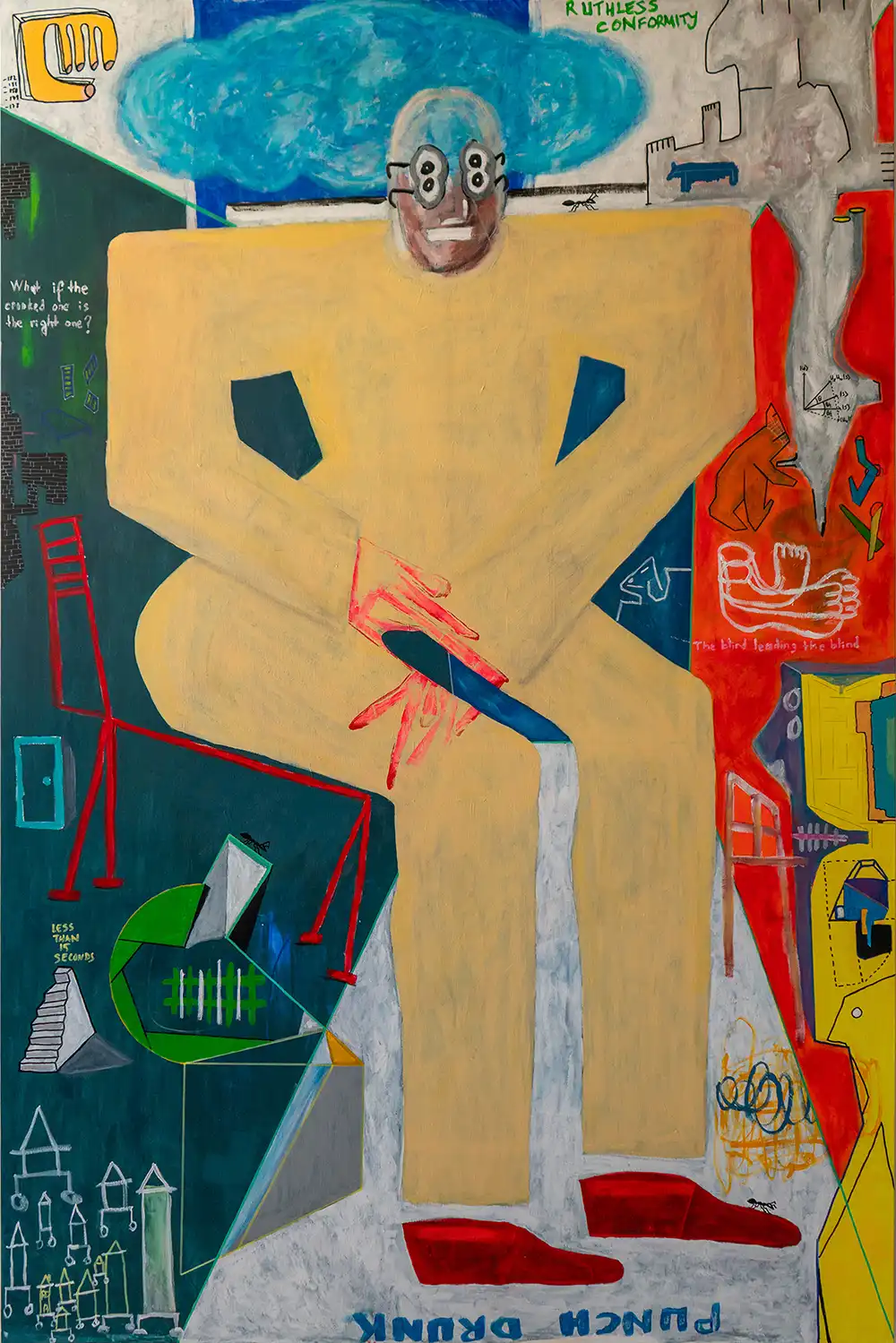
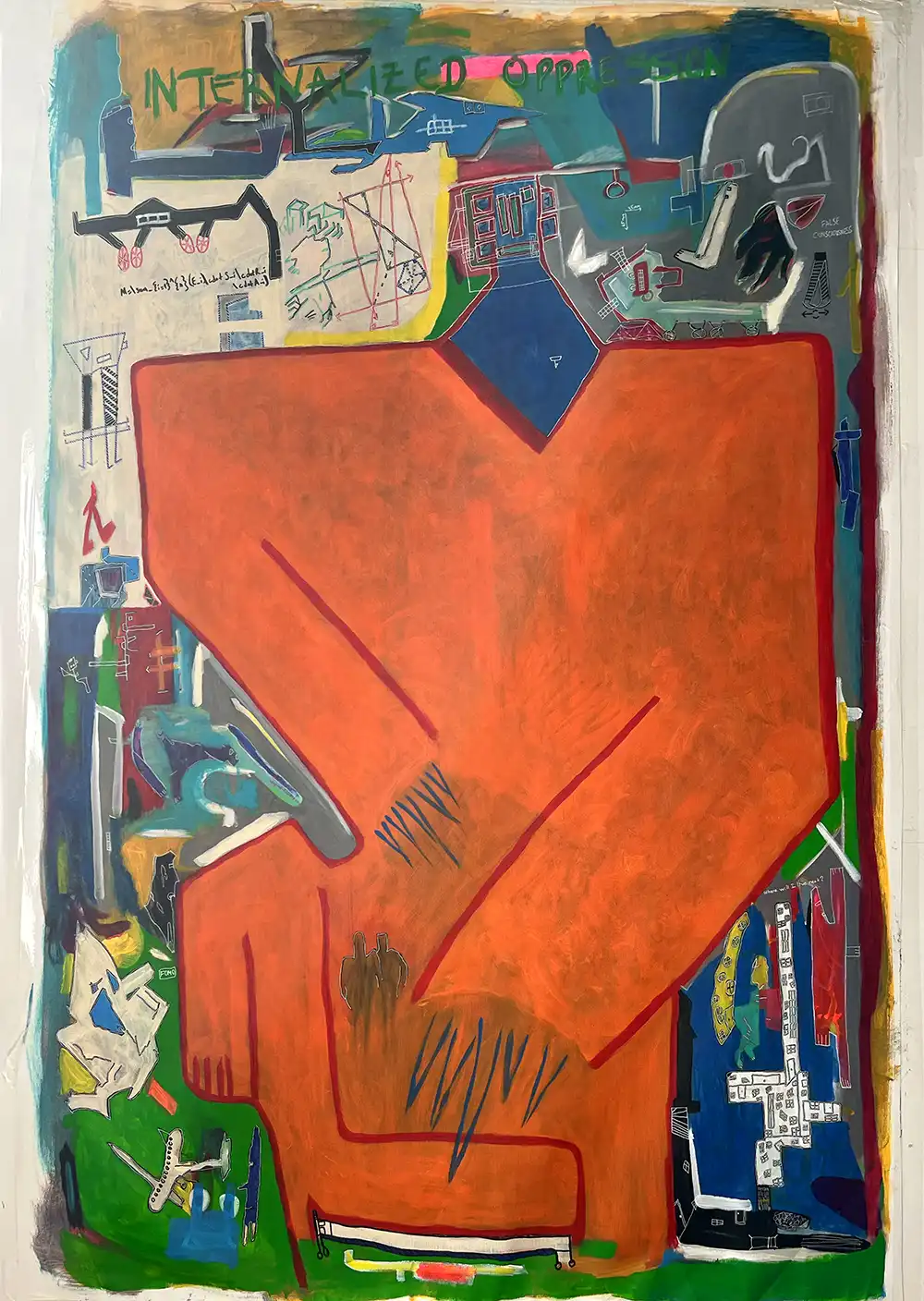
- Year
- 2024
- Medium
- Acrylic on canvas
- Dimensions
- 130 × 195 cm
Part of the Muscle Memory series.
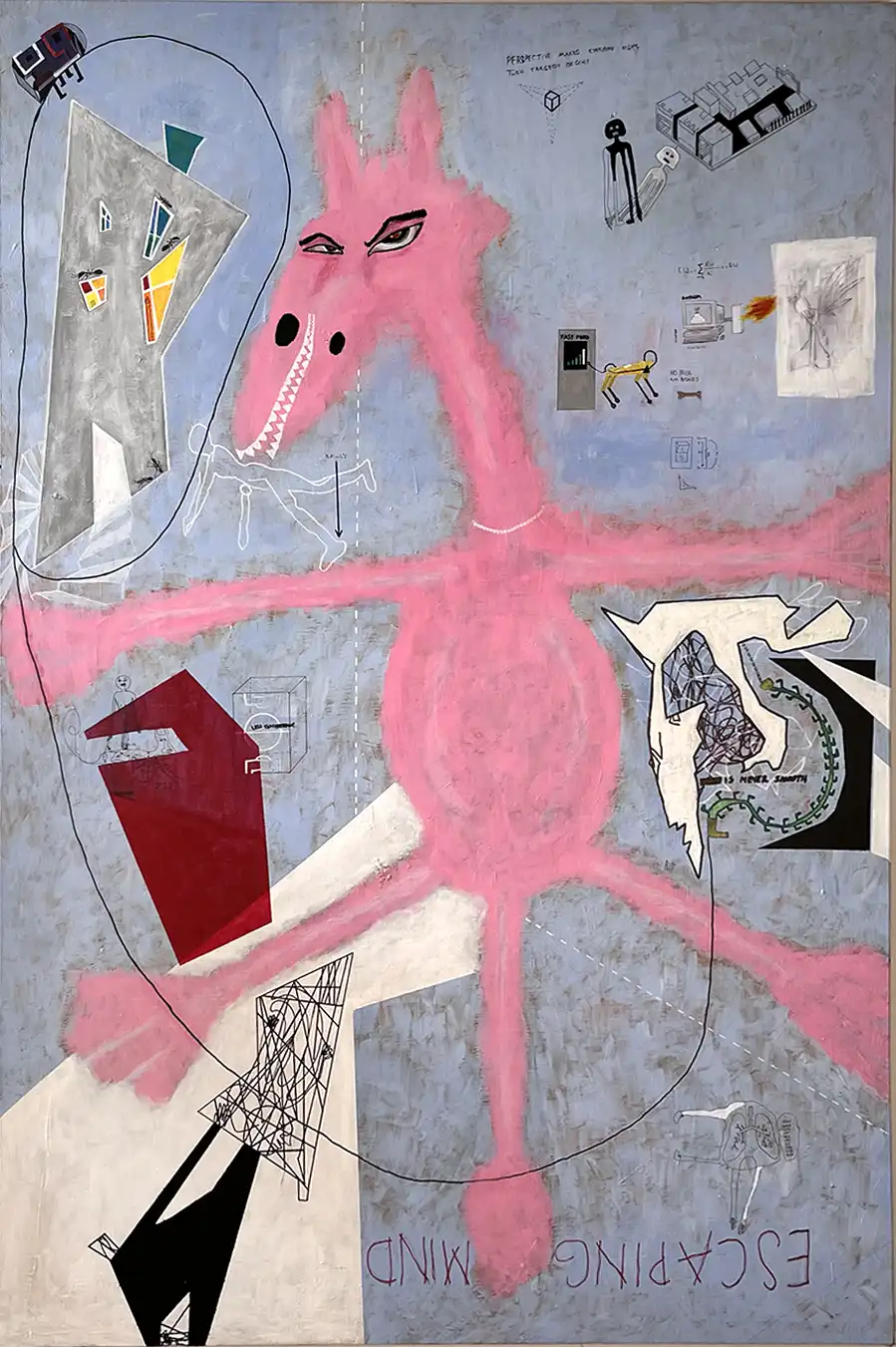
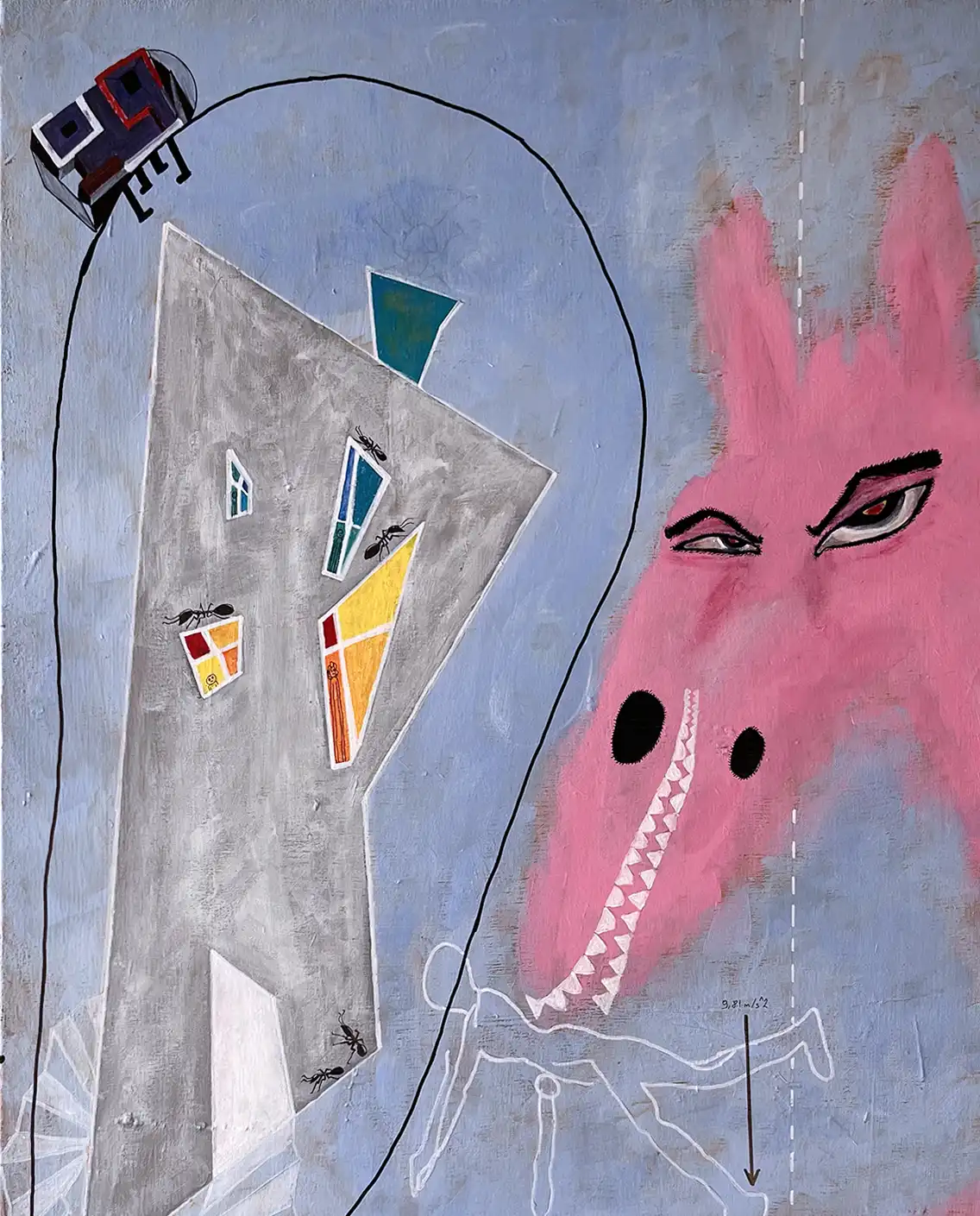
Escaping Mind is concerned less with knowledge itself than with how we decide that something is true.
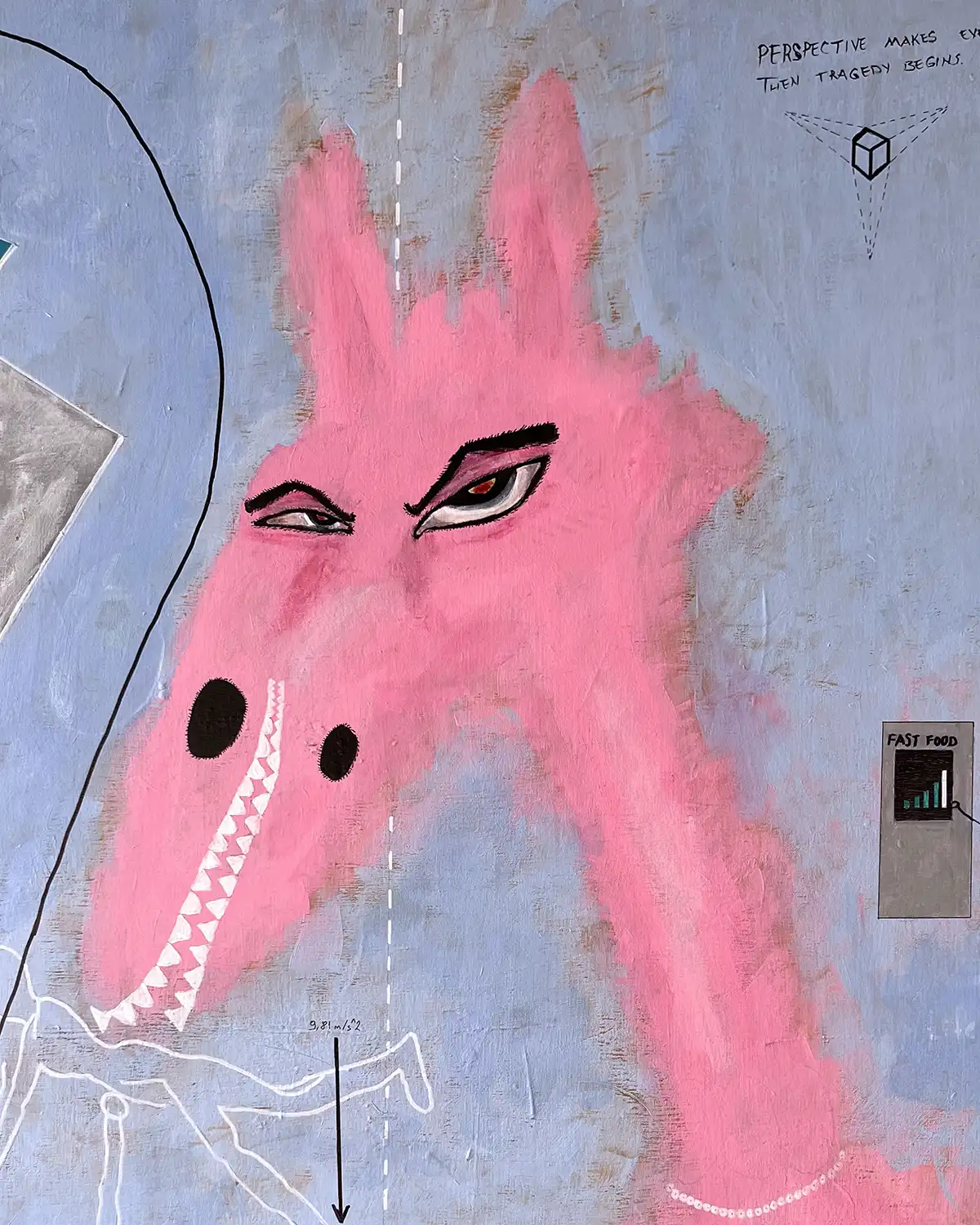
If someone says, “pink giraffes do not exist,” the statement sounds fairly certain. But if that person has never seen every giraffe in the world, how can they truly know? Is never having seen something enough to know that it does not exist?
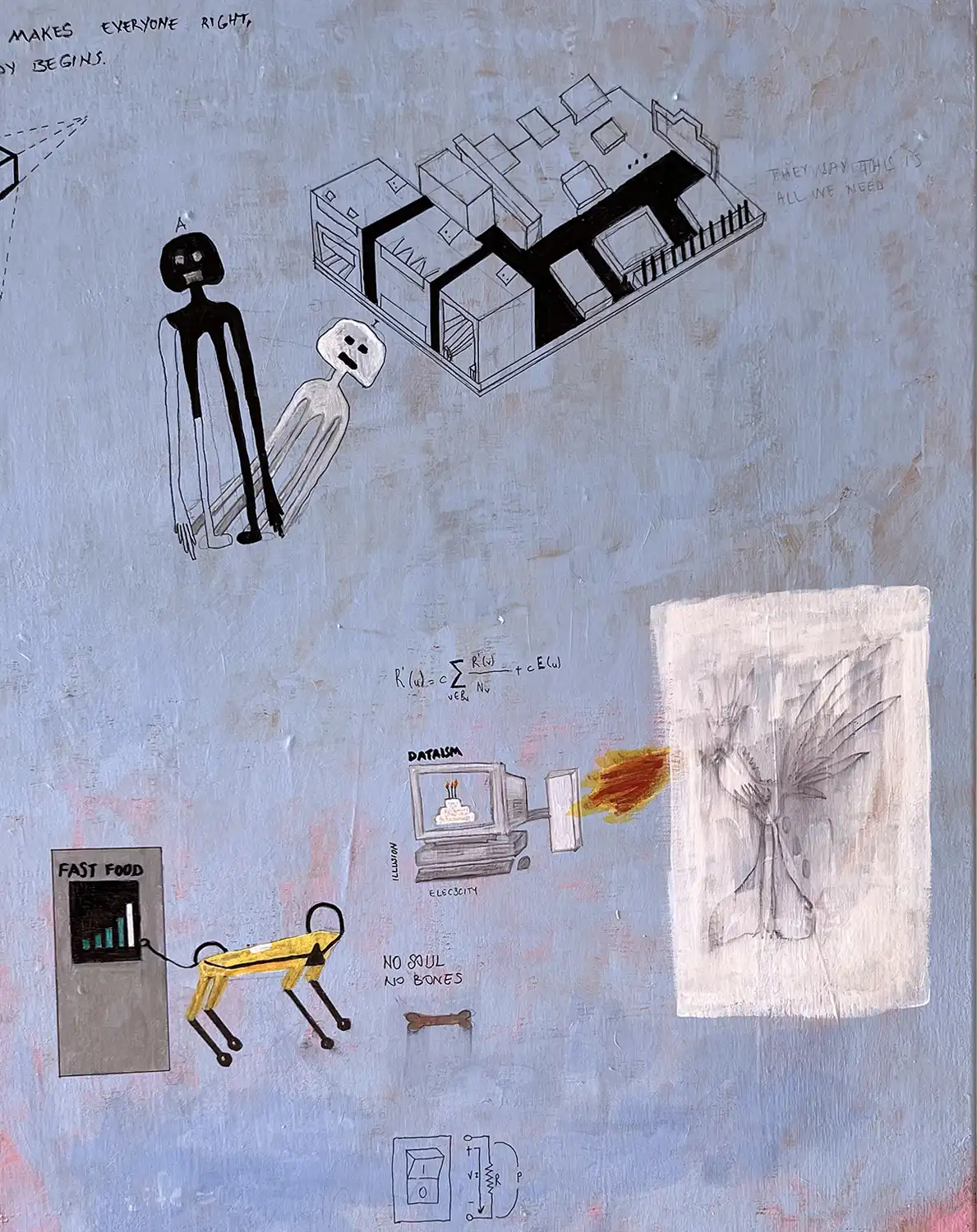
We rarely have direct access to most of what we know. Information reaches us through other people’s observations, institutions, measurements, statistics, images, screens and, increasingly, algorithms. This does not mean that the information is false. But it does suggest that knowing often involves an act of trust.
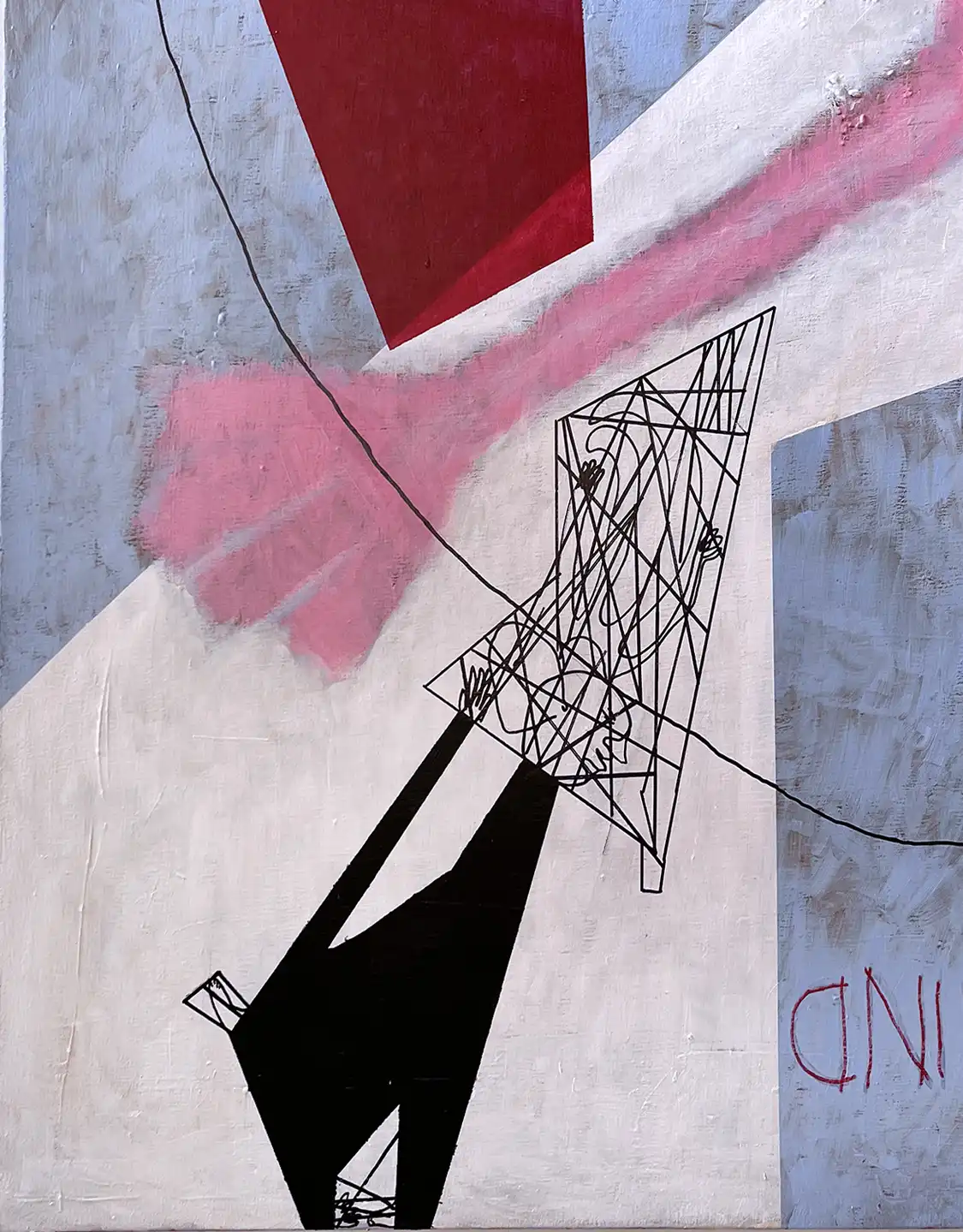
This is where systems enter the picture. Information is not simply produced; it is also selected, classified, verified, ranked and circulated. Some information appears before us repeatedly, while other information remains almost invisible. As a result, much of our relationship with reality is shaped by mechanisms we do not directly experience.
Perhaps the question is not as simple as whether a system gives us false information. There is a more fundamental one: Why do we trust the tools we use to decide what is true?
Once information appears reliable enough, it can begin to detach itself from its source. We forget where we learned something and remember only that we know it.
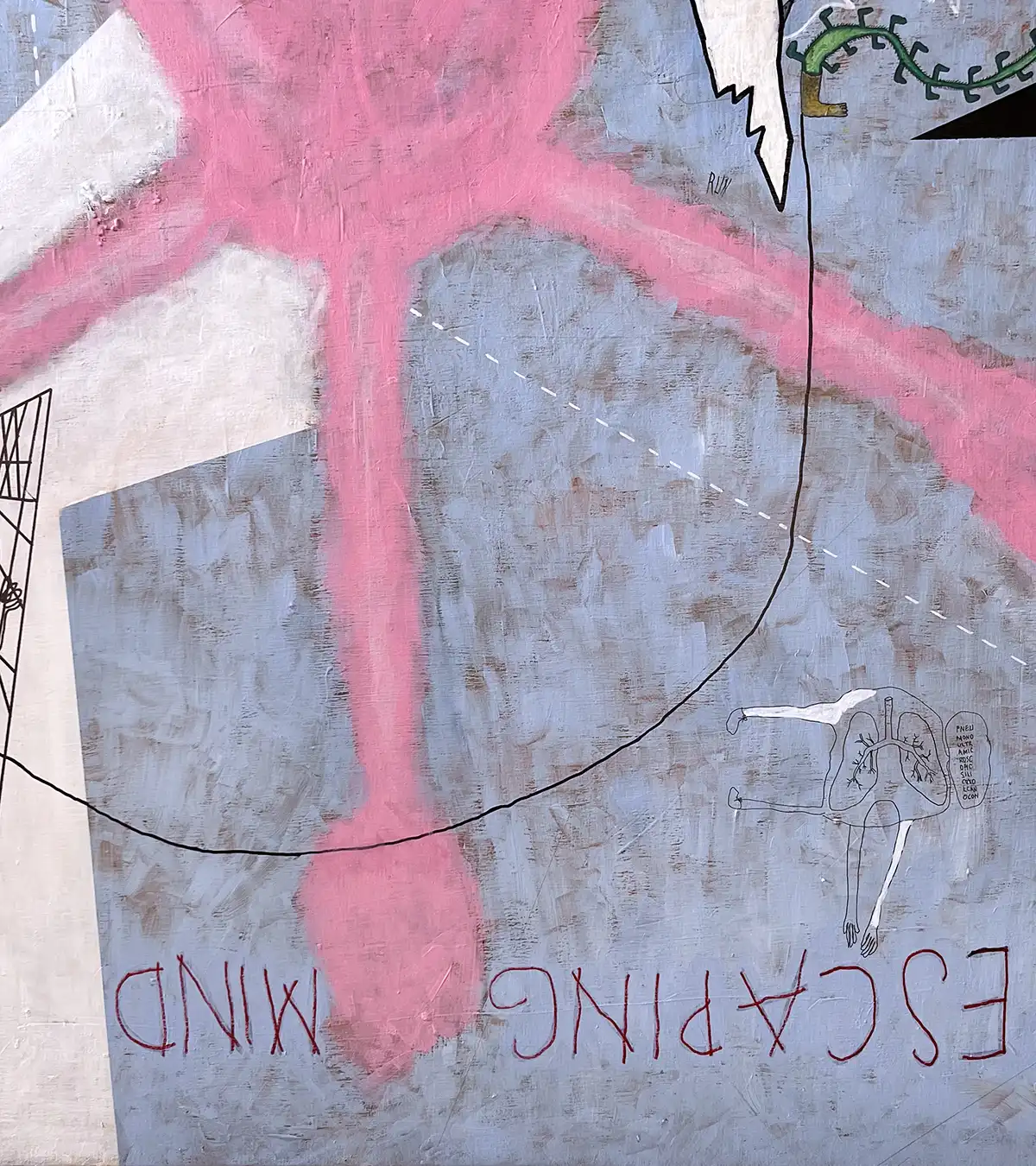
Escaping Mind exists within this uncertainty. Rather than rejecting truth or suggesting that everything should be doubted, it questions how our sense of certainty is constructed.
If we understand the world largely through other people’s eyes, institutional records and what systems make visible to us, can we really see the boundary between what we know and what we are allowed to know?