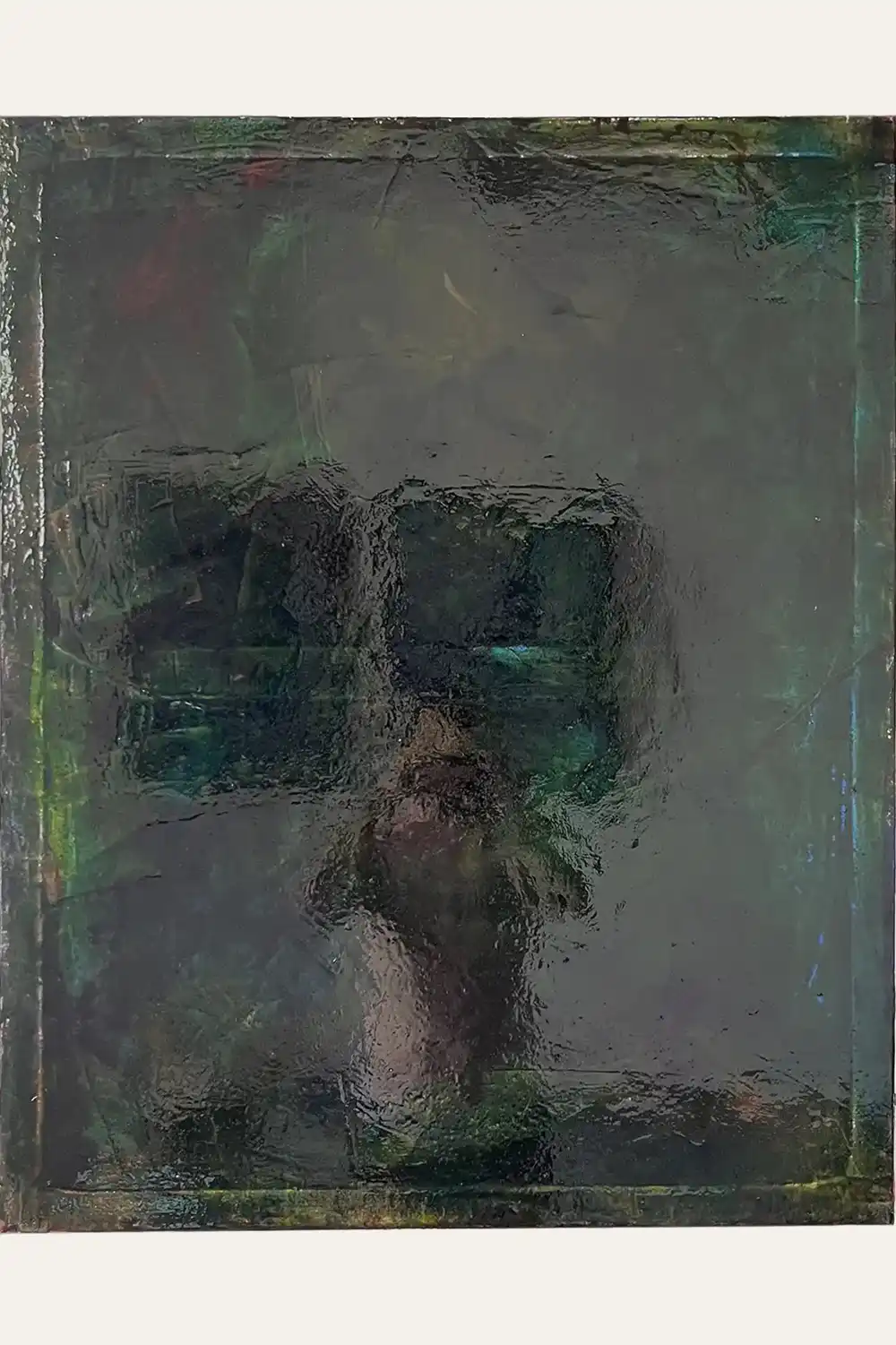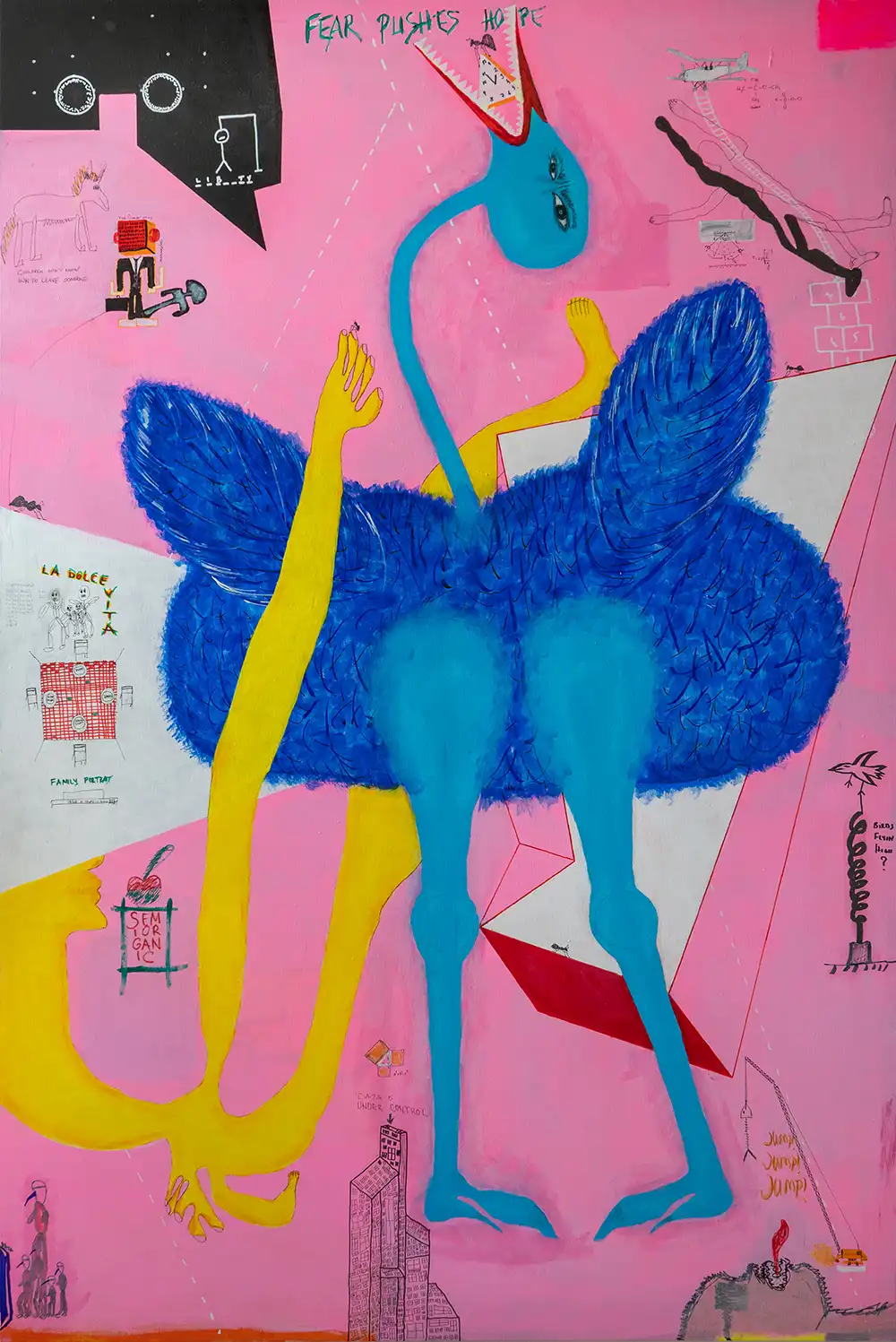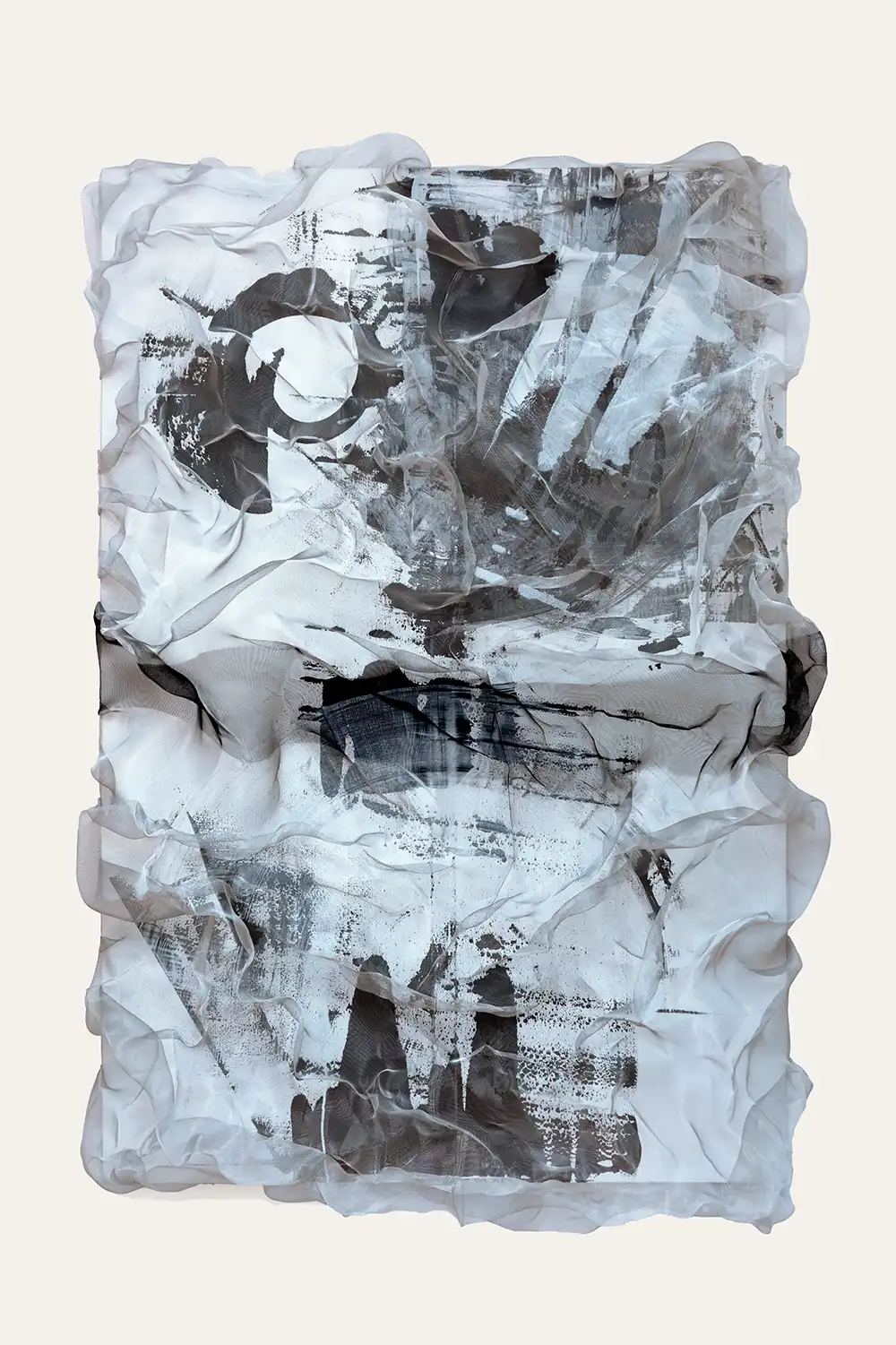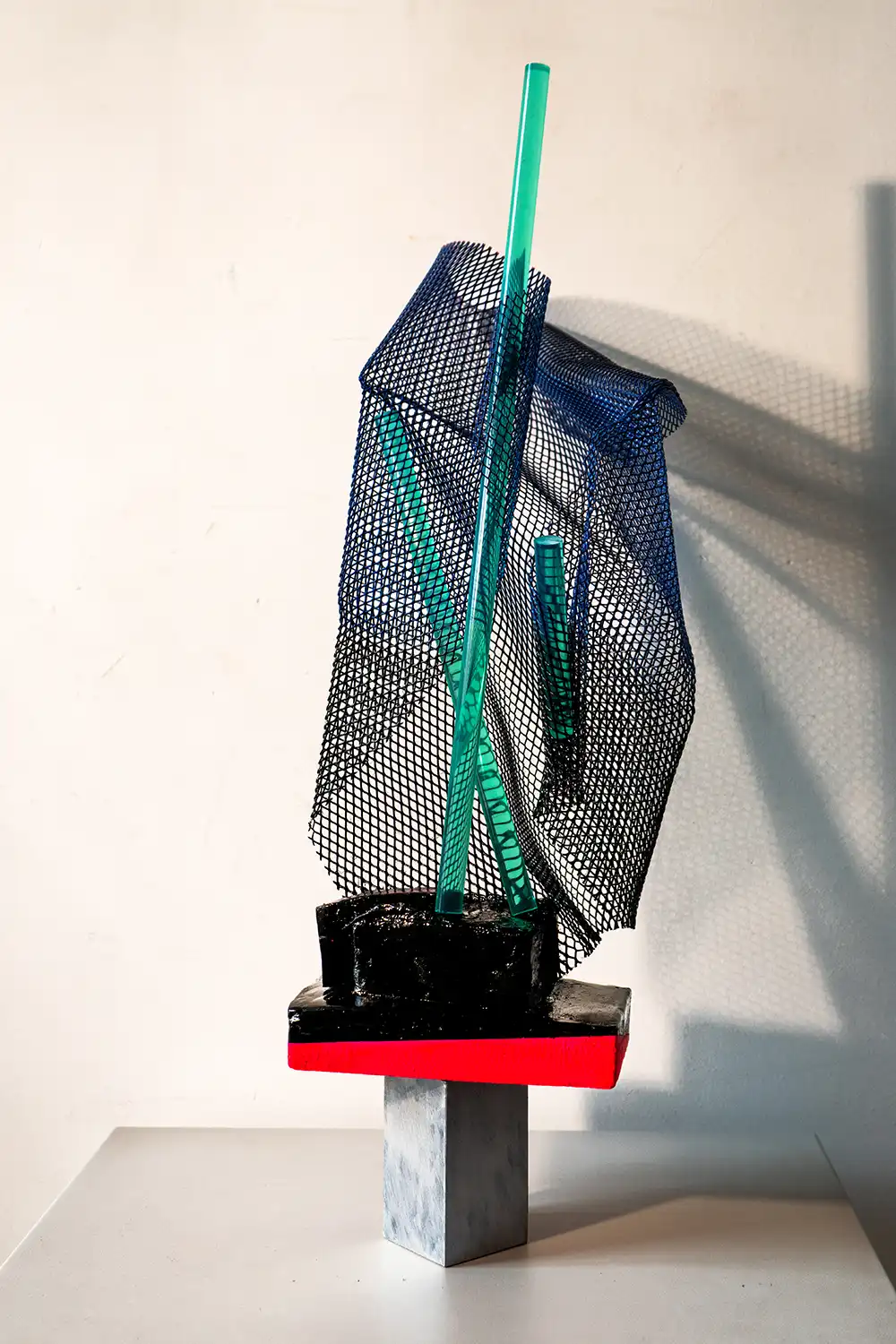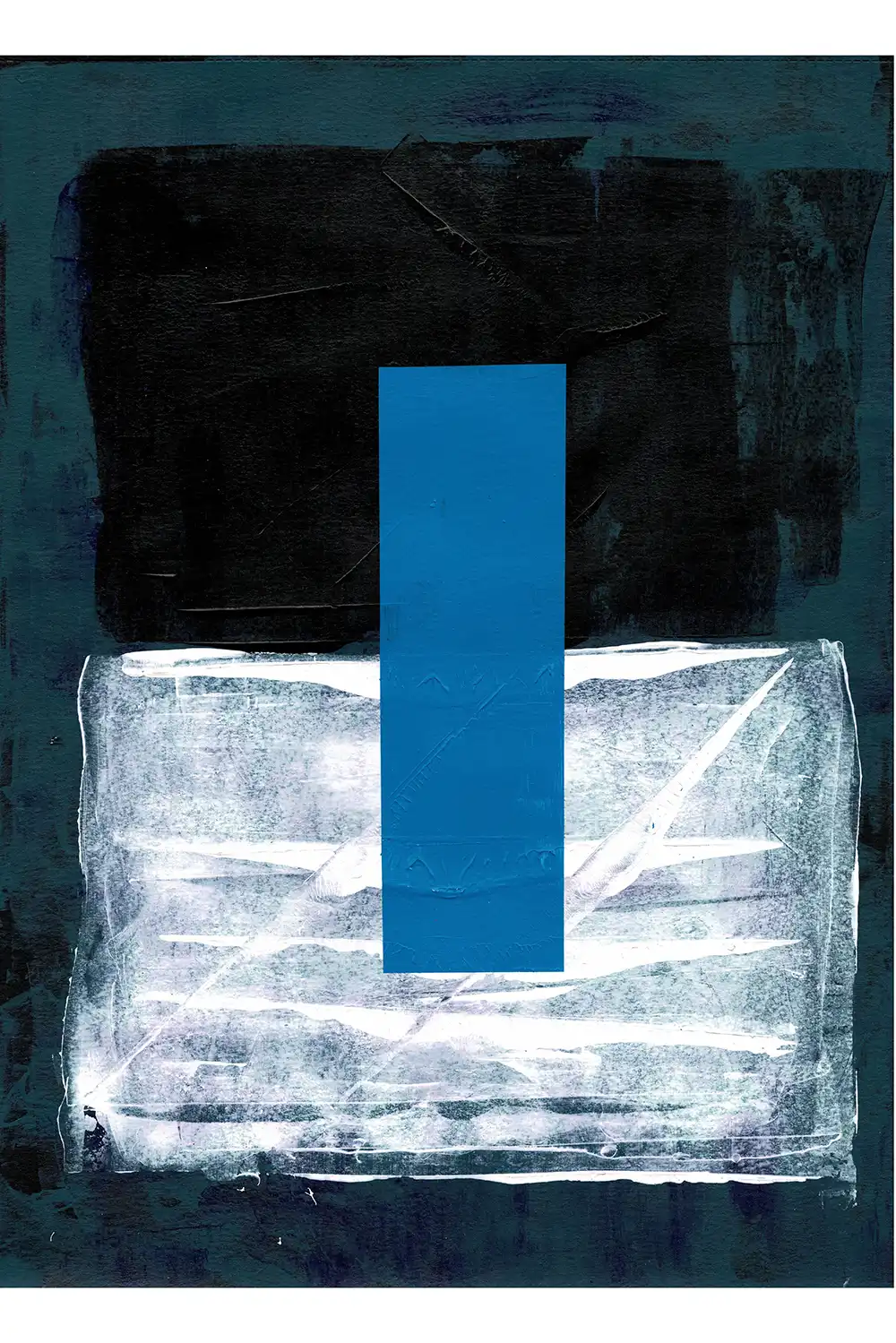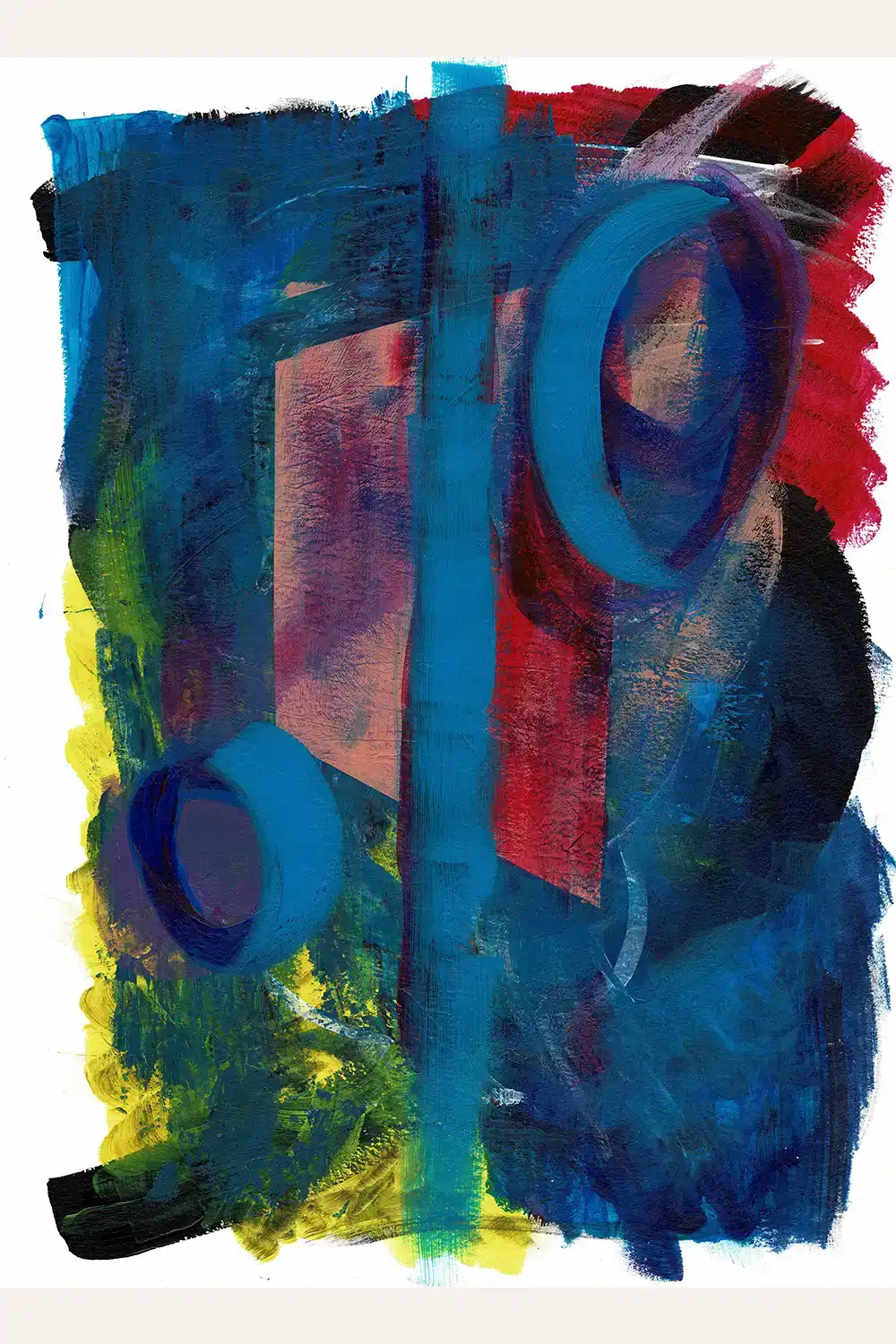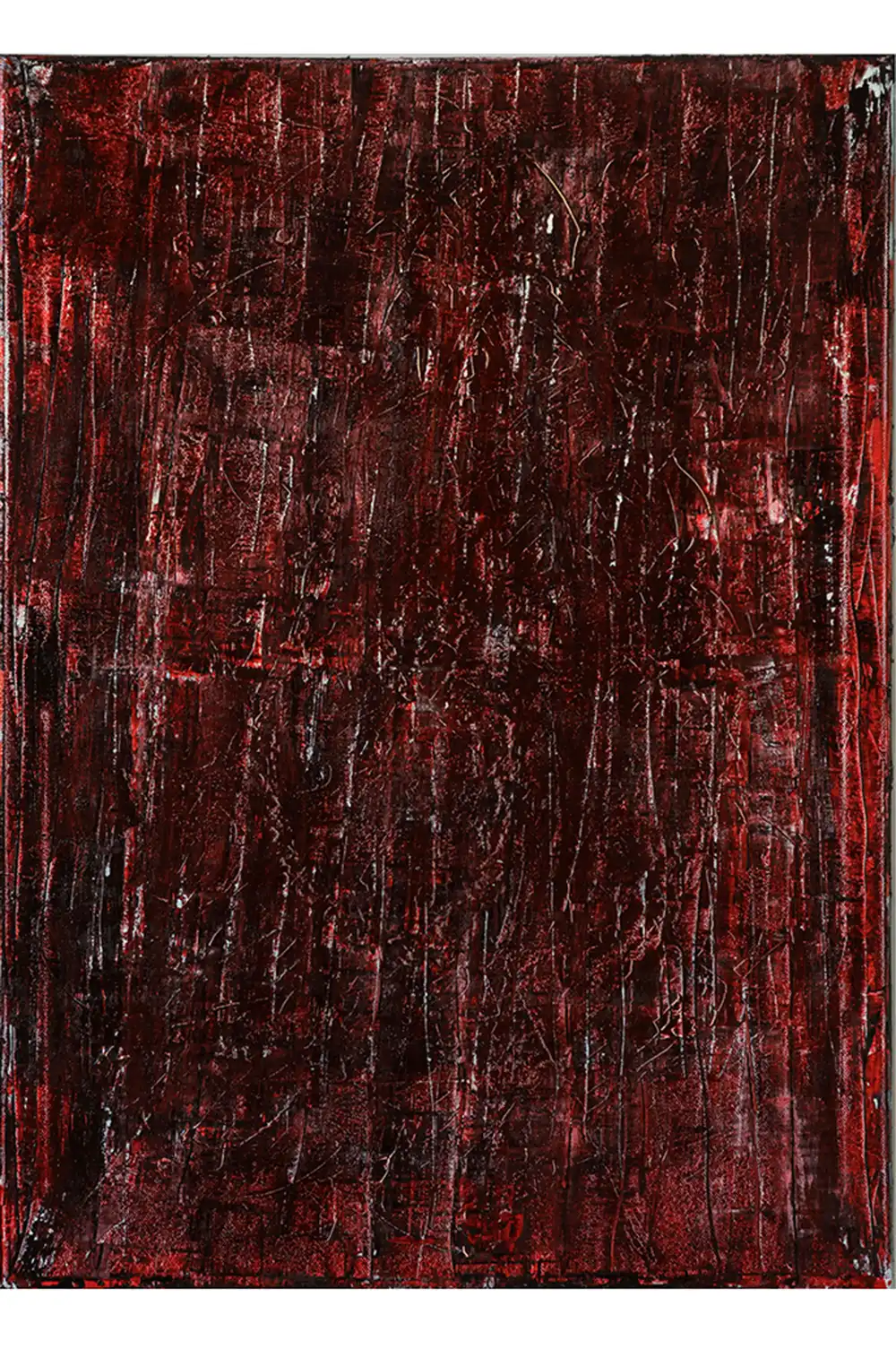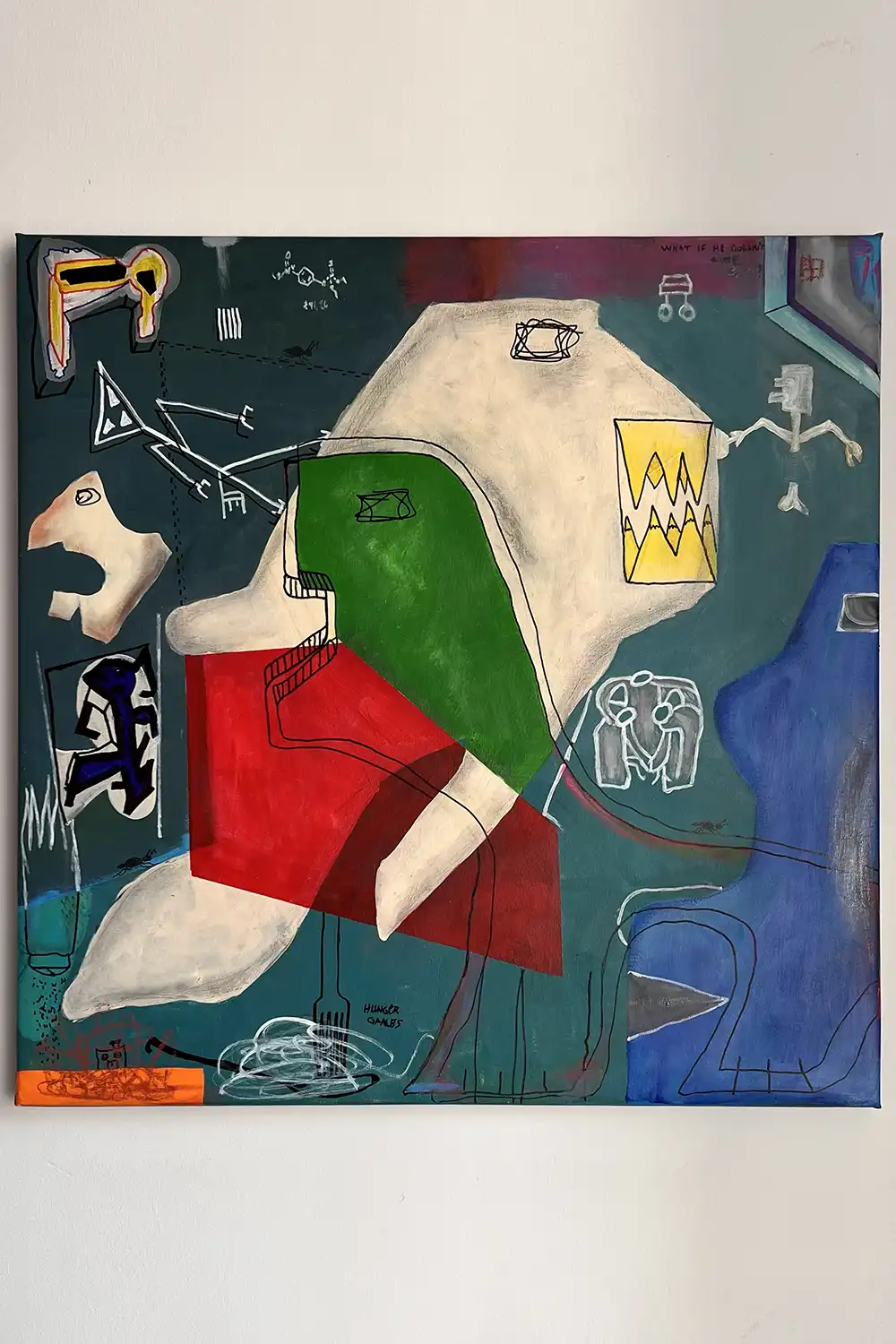
Epoxy resin begins as a liquid with no intention. It is clear, viscous, and indifferent. You pour it, and for a few hours, it obeys gravity. Then something shifts. It thickens. It holds the brushstroke in suspension. It traps the air bubble, the dust particle, the accidental drip that the artist was too slow to remove. By the time it cures, it has become a fossil of its own making.
This is why I work with it. Not because it is modern, or because it shines. Because it refuses to let go.
The Suspension of Time
Acrylic paint records the gesture. Epoxy records the moment after the gesture. The pause. The decision to leave something as it fell. When the two are combined, the painting contains two time signatures: the quick, muscular act of applying color, and the slow, geological settling of resin. The viewer sees both at once. The energy and the entombment.
In the Muscle Memory series, this dual time is essential. The body moves fast. Memory moves slow. The epoxy holds them together in a single surface. What the eye cannot hold — the split second between intention and action — the resin preserves.
The Ethics of Letting Go
There is a discipline to working with epoxy. You cannot control it completely. You can guide it, tilt the canvas, warm the room. But at a certain point, the material takes over. The artist must decide when to intervene and when to surrender. This is not a metaphor. It is a physical negotiation. And the paintings that survive this negotiation are the ones where the artist knew when to stop.
What Collectors See
Questions about how a surface may change over time are important. The answer is subtle. The epoxy will yellow slightly if exposed to direct sun for decades. But the gesture inside it will not move. No material is outside time; light, formulation, handling, and conservation all shape how a surface ages. The conceptual aim is to hold the memory of the gesture, not to promise permanence.
For the Technically Curious
If you are drawn to the materiality of contemporary painting — not just the image, but the archaeology of its making — mixed-media work offers a depth that traditional canvas cannot. The surface is not a window. It is a core sample.
I am happy to discuss material processes, provide studio images of works in progress, or consult on the technical aspects of mixed-media acquisition. If you have questions about surface, longevity, or technique, please get in touch.
View the Muscle Memory series · Explore selected works · Inquire about process